


Imagine walking into your Victorian hallway on a quiet Sunday morning, coffee in hand, only to notice that familiar click beneath your foot. One tile rocks slightly. Another has lifted just enough to catch your shoe. Before long, what was once a beautifully level entrance has become uneven, cracked, and potentially unsafe.
If you’ve noticed your Victorian tiles sinking, lifting, or becoming loose, you’re certainly not alone. It’s one of the most common issues we see in period properties throughout Edinburgh, Glasgow and Newcastle.
The good news? A lifting Victorian floor doesn’t necessarily mean it needs replacing. In many cases, professional Victorian tile restoration can preserve the original flooring while addressing the root cause of the problem.
In this guide, we’ll explain why Victorian tiles sink or lift, the warning signs to look out for, how professionals restore them, and why acting early can save both money and your home’s original character.

Why Do Victorian Tiles Sink or Lift?
Victorian tiled floors were designed to last for generations, and many have. However, even the highest-quality floors are now well over a century old.
Unlike modern tiled floors, Victorian floors were built using traditional materials and installation techniques. Over decades, changes in moisture, movement, repairs, and everyday wear can all affect the floor beneath the tiles.
The most common causes include:
- Subfloor movement
- Water damage
- Failing mortar beds
- Poor previous repairs
- Heavy foot traffic
- Age-related deterioration
Understanding the cause is essential because simply replacing a loose tile rarely solves the underlying issue.
Subfloor Movement
One of the biggest causes of lifting Victorian floors is movement beneath the surface. Older homes naturally settle over time. Timber joists can shift, foundations can move slightly, and suspended floors may flex under weight.
As the subfloor moves, the rigid tiled surface cannot flex with it. Eventually this leads to:
- Loose tiles
- Hollow sounds
- Cracked grout
- Uneven flooring
- Lifted tile edges
Professional Victorian floor tile restoration doesn’t just repair the visible tiles—it investigates what’s happening underneath.
Moisture and Damp Problems
Water is often Victorian flooring’s biggest enemy. Small amounts of moisture entering beneath the tiles can slowly weaken the original bedding materials. Common sources include:
- Leaking pipes
- Rising damp
- Poor drainage
- External doorway exposure
- Blocked air vents
Over time, the mortar begins to fail, allowing tiles to become loose before eventually lifting. Many homeowners first notice the problem after several wet winters.
This is why quality tile restoration services always investigate moisture before carrying out repairs.
Ageing Mortar and Adhesives
Victorian floors weren’t installed using modern flexible adhesives.
Instead, many original floors were laid on lime mortar or sand-and-cement beds.
After decades, or even 100+ years, these materials naturally weaken.
Signs include:
- Hollow-sounding tiles
- Powdering beneath tiles
- Crumbling joints
- Individual tiles lifting
Professional Victorian tile repair often involves carefully removing affected tiles, rebuilding the bedding layer, and relaying the originals wherever possible.
Poor Previous Repairs
Ironically, some of the worst damage we encounter wasn’t caused by age; it was caused by poor repairs. Over the years, many period properties have undergone DIY fixes using:
- Modern cement adhesives
- Incorrect grout
- Poorly matched replacement tiles
- Uneven levelling compounds
These incompatible materials prevent the floor from behaving as originally intended.
As surrounding tiles continue to move naturally, repaired sections begin to fail. A specialist tile restoration company understands how traditional materials interact and restores the floor sympathetically.
Heavy Foot Traffic
Victorian hallways were built to impress.
They’ve also welcomed thousands, sometimes millions, of footsteps over their lifetime. High-traffic areas experience:
- Surface wear
- Grout deterioration
- Localised movement
- Minor settlement
Without maintenance, these small issues gradually develop into larger restoration projects.
Tree Roots and Ground Movement
Properties with tiled entrance paths can also experience movement from outside. Tree roots expanding beneath pathways may cause:
- Uneven levels
- Cracked borders
- Lifted tiles
- Broken joints
Professional Victorian tile restoration includes addressing the cause, not simply relaying the visible tiles.
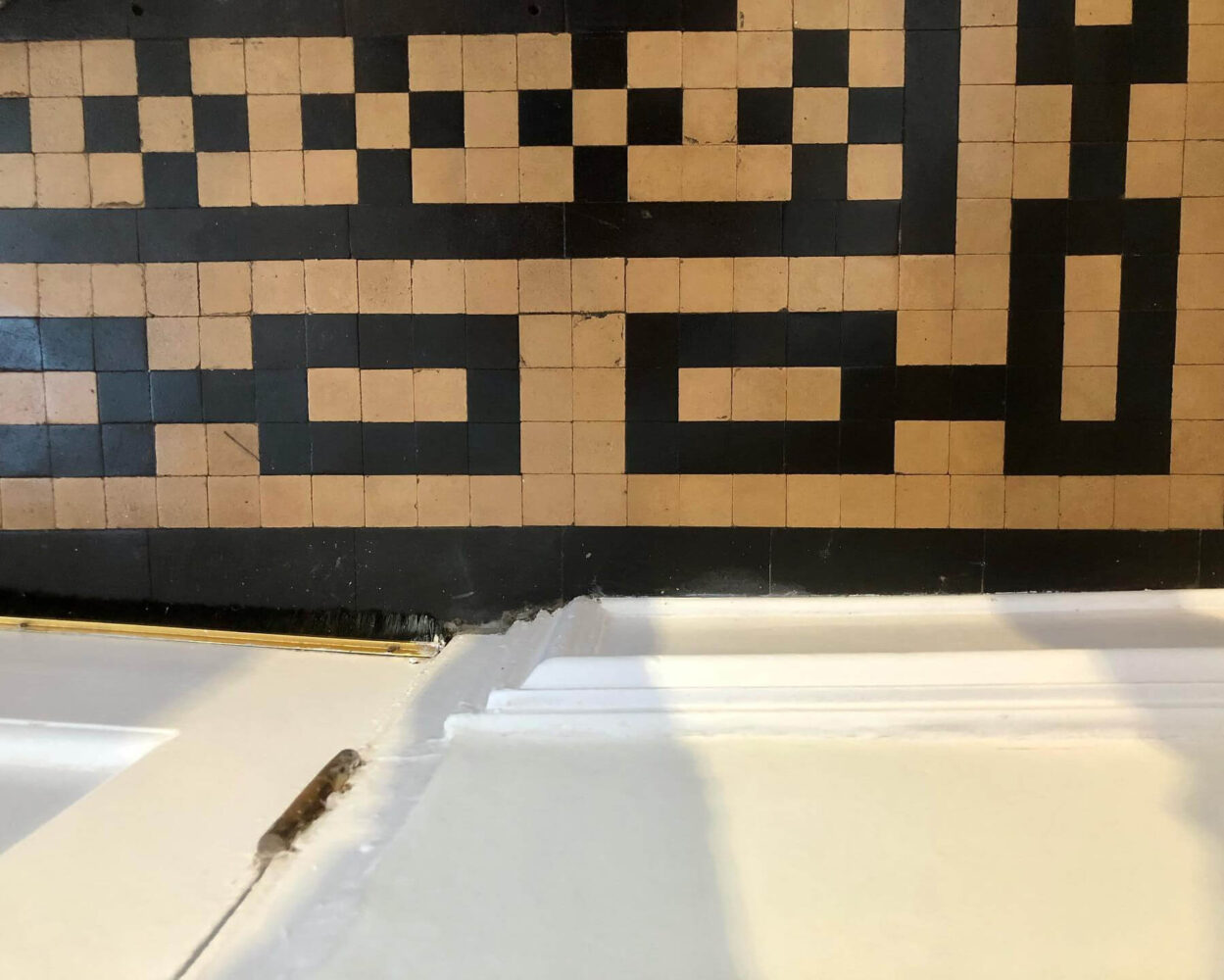
Warning Signs Your Victorian Tiles Need Restoration
Early intervention is almost always cheaper than waiting until major damage develops. Watch out for:
Loose or rocking tiles
- Movement underfoot usually indicates failing bedding.
Hollow sounds
- Tap gently across the floor.
- A hollow sound often suggests the tile has detached underneath.
Cracked grout
- This can be one of the earliest indicators of movement.
- Professional grout restoration often prevents larger repairs later.
Uneven surfaces
- Even a few millimetres of lifting may indicate wider structural movement.
Missing tiles
- Don’t ignore gaps.
- Water entering exposed areas accelerates deterioration.
Can Sinking Victorian Tiles Be Saved?
Thankfully, yes, in many cases.
One of the biggest misconceptions is that lifting tiles automatically requires full tile replacement.
In reality, experienced restoration specialists aim to preserve as much of the original floor as possible. Professional Victorian tile restoration may involve:
- Lifting damaged sections
- Stabilising the subfloor
- Cleaning original tiles
- Reusing salvaged materials
- Replacing only irreparable pieces
- Repointing joints
- Sealing the restored floor
The result retains the property’s authentic character while improving durability.
Why DIY Repairs Often Make Things Worse
A quick internet search may suggest injecting adhesive beneath loose tiles or replacing cracked pieces yourself.
Unfortunately, Victorian floors rarely respond well to modern DIY solutions. Common mistakes include:
- Using incorrect adhesive
- Filling movement joints with rigid grout
- Damaging surrounding tiles during removal
- Installing poorly matched replacements
What starts as a simple broken tile repair can become a much larger restoration project.
The Professional Victorian Tile Restoration Process
At Were Tiling, every restoration begins with understanding the floor rather than rushing into repairs.
Step 1: Detailed Inspection
Our tile specialist assesses:
- Tile movement
- Moisture levels
- Structural condition
- Existing repairs
- Overall pattern integrity
Step 2: Careful Tile Removal
- Only affected sections are lifted.
- Where possible, original tiles are preserved for reinstallation.
Step 3: Structural Repairs
Depending on the issue, this may include:
- Subfloor stabilisation
- Bedding repairs
- Moisture control
Step 4: Victorian Tile Repair
- Damaged sections are restored using reclaimed or carefully matched replacement tiles.
- The goal is always to make repairs virtually invisible.
Step 5: Cleaning Victorian Tiles
Many homeowners are amazed by the transformation. Professional cleaning Victorian tiles removes decades of:
- Dirt
- Wax
- Old sealers
- Surface staining
Without damaging the original finish.
Step 6: Grout Restoration
- Fresh grout stabilises the floor while improving appearance.
- Correct colour matching ensures repairs blend naturally.
Step 7: Sealing & Protection
- Finally, the restored floor is sealed to protect against future wear and moisture.
Why Choose Were Tiling?
At Were Tiling, we specialise in heritage flooring throughout Glasgow, Edinburgh and Newcastle.
Our services include:
- Victorian tile restoration
- Grout restoration
- Cracked tile repair
- Specialist conservation work
Every restoration project is approached with patience, precision and respect for the property’s history. Because no two Victorian floors are ever the same.
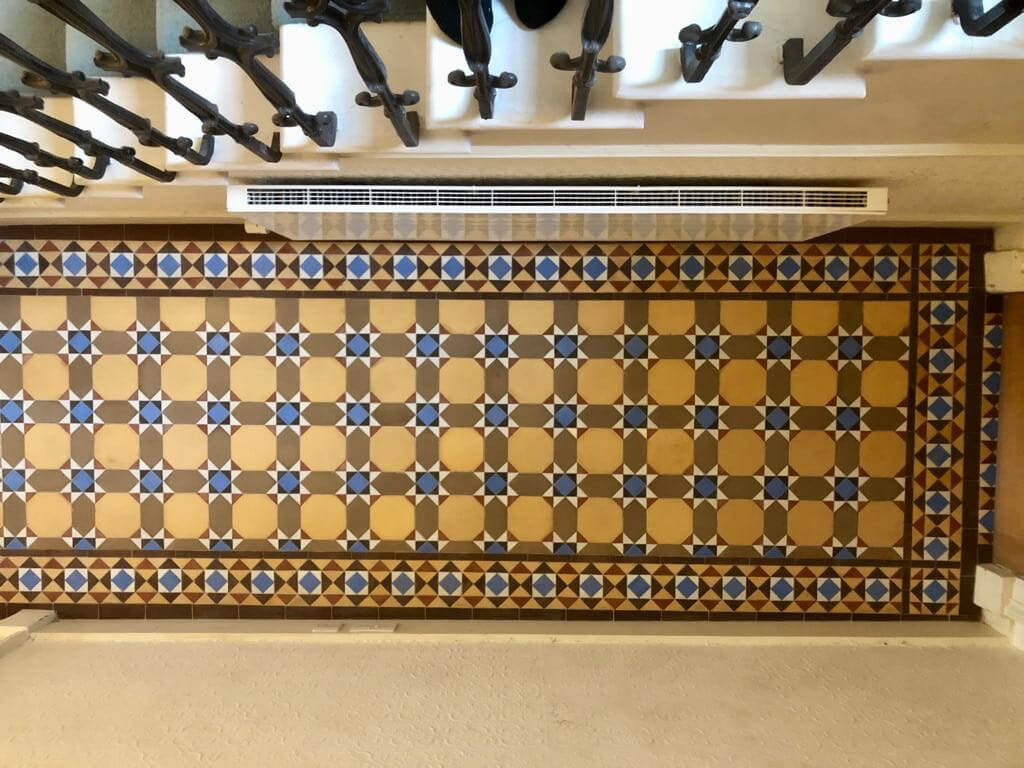
Final Thoughts
Victorian tiles don’t usually sink or lift overnight.
It’s often the result of decades of subtle movement, moisture, ageing materials and previous repairs.
The encouraging news is that many original floors can be saved through expert Victorian tile restoration, avoiding unnecessary replacement while preserving the character that makes period homes so special.
If you’ve noticed loose tiles, hollow sounds or uneven flooring, don’t wait until the damage spreads.
An early inspection can often mean a simpler, more cost-effective restoration, and help ensure your Victorian floor continues telling its story for many years to come.
Restore Your Victorian Tiles with Confidence
Whether you own a Victorian townhouse in Edinburgh, a traditional tenement in Glasgow, or a period property in Newcastle, Were Tiling can help restore your original flooring with expert craftsmanship and attention to detail.
Contact Were Tiling today for a professional assessment and discover how our specialist Victorian tile restoration services can preserve the beauty and history of your home.
Frequently Asked Questions
- Can lifting Victorian tiles always be repaired?
In many cases, yes. If the original tiles are largely intact, professional restoration can stabilise the floor, repair damaged sections, and preserve the original design. - Is Victorian tile restoration cheaper than replacing the floor?
Often, yes. While restoration is a specialist service, retaining original tiles is frequently more cost-effective than removing and replacing an entire heritage floor. - How long does Victorian tile restoration take?
This depends on the size and condition of the floor. Minor repairs may take a day or two, while larger restoration projects can take longer to ensure the work is completed to a high standard. - Should I repair loose Victorian tiles myself?
DIY repairs can sometimes cause more damage, particularly if modern adhesives or incorrect grout are used. It’s best to have a restoration specialist assess the floor first.