


Victorian tiles are known for their intricate patterns, traditional appearance and ability to add character to period properties. However, achieving a durable and attractive finish depends on more than choosing the right Victorian tile. The adhesive used during Victorian tile installation also plays an important role in keeping the tiles securely bonded and able to withstand everyday foot traffic.
So, what are the best adhesive products for Victorian tile installation?
For most projects, the right adhesive depends on the tile material, substrate, location, moisture exposure and whether you are installing new tiles or restoring an existing Victorian floor. Flexible cement-based adhesives, suitable tile adhesives and, in some specialist situations, epoxy-based products can all have a role. The key is selecting an adhesive that is compatible with both the tiles and the surface underneath.
If you are planning a traditional tiled floor in Glasgow, Edinburgh or Newcastle, professional advice can help you avoid common installation problems such as loose tiles, cracking and moisture-related damage.
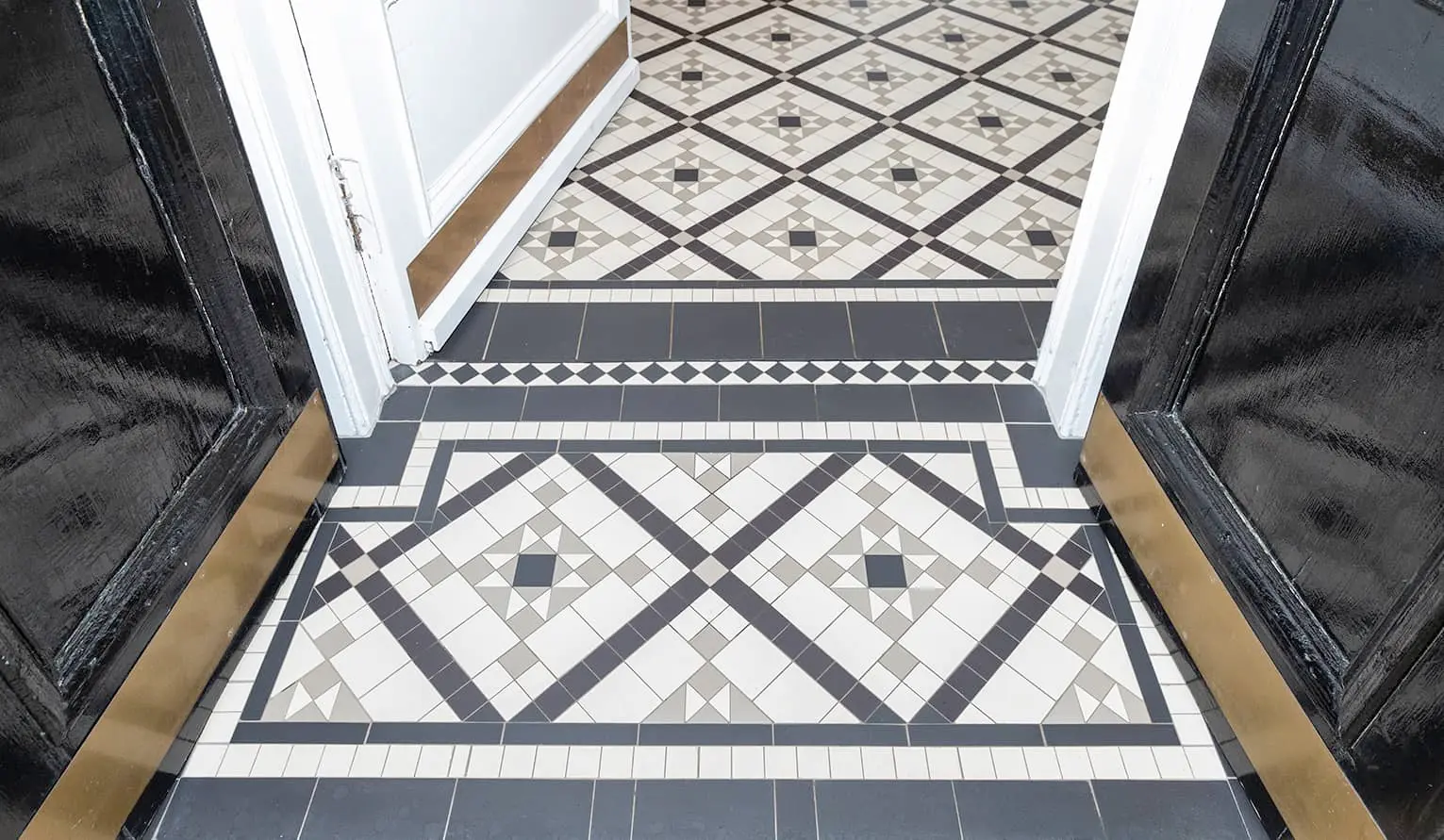
What adhesive is best for Victorian tile installation?
No single adhesive is suitable for every Victorian tile installation. A professional tile specialist will normally assess the tile type and substrate before recommending a product.
For many modern installations, a flexible cement-based tile adhesive is a practical choice. These adhesives can accommodate a small amount of movement in the substrate while providing a strong bond.
Depending on the project, other options can include:
- Cement-based flexible adhesive
- Rapid-setting tile adhesive
- Adhesives designed for natural stone or specific tile materials
- Epoxy adhesive for specialist applications
- Specialist products recommended for challenging or moisture-prone substrates
The adhesive should always be selected according to the manufacturer’s technical guidance and the conditions of the installation.
For a period property, this assessment becomes particularly important. Older floors can have uneven substrates, previous layers of adhesive, movement or moisture issues that affect how a new floor should be installed.
Why does adhesive matter for Victorian floor tile installation?
Victorian floors are often associated with decorative geometric patterns, encaustic-style designs and small-format tiles. These characteristics can make installation more detailed than laying larger contemporary tiles.
A suitable adhesive helps to:
- Create a strong bond between the tile and substrate
- Reduce the risk of tiles becoming loose
- Accommodate minor substrate movement where appropriate
- Support a consistent finished surface
- Improve the long-term durability of the floor
- Reduce the likelihood of premature cracking or debonding
However, adhesive cannot compensate for an unsuitable or poorly prepared substrate.
During Victorian floor tile installation, preparation is just as important as the adhesive itself. Dust, grease, loose material, moisture and unstable surfaces can all affect adhesion.
This is why professional tile installation services generally begin by assessing the condition of the existing floor rather than immediately applying adhesive.
Flexible cement-based tile adhesive
A flexible cement-based adhesive is one of the most commonly considered options for modern tile installation.
Its flexibility can be useful where the substrate is exposed to small amounts of movement or thermal change. This is particularly relevant in floors where the underlying surface is not completely rigid.
For Victorian-style floor tiles, the adhesive should be compatible with the specific tile material and the substrate.
A professional installer will consider factors such as:
- Tile type and porosity
- Tile size
- Substrate material
- Indoor or outdoor location
- Expected foot traffic
- Moisture exposure
- Underfloor heating, where applicable
Flexible adhesive can therefore be a strong option, but the correct specification matters more than simply choosing a product labelled “flexible”.
Rapid-setting adhesive
Rapid-setting adhesives can be useful when a project requires shorter installation or waiting times.
They are designed to develop sufficient strength relatively quickly, allowing subsequent stages of the installation to take place sooner than with some standard-setting products.
However, rapid-setting adhesive is not automatically the best choice for every Victorian tile.
Decorative floors often require careful positioning and alignment. Installers need enough working time to establish the pattern correctly, particularly when working with numerous small tiles.
The adhesive therefore needs to balance setting time with the practical requirements of the installation.
Specialist adhesive for natural or porous tiles
Some traditional or Victorian-style tiles may require a particular adhesive specification because of their composition, porosity or finish.
Using a generic adhesive without checking compatibility can create problems. The adhesive may not bond correctly, may stain certain materials or may not perform as expected under the conditions of the floor.
For this reason, a tiles specialist should consider the manufacturer’s recommendations for both the tile and adhesive.
This is particularly relevant when working with:
- Porous tiles
- Natural stone
- Decorative tiles
- Heritage-style materials
- Specialist restoration materials
The aim is to create a compatible system in which the substrate, adhesive, tile and grout work together.
Epoxy adhesive for specialist applications
Epoxy adhesives are highly durable and resistant to moisture and chemicals, making them useful for certain specialist applications.
However, they are not necessarily the default choice for a typical residential Victorian floor.
They can be more difficult to work with and may have different application and cleaning requirements. Their suitability depends on the specific project rather than simply their strength.
A professional tile installation company can determine whether an epoxy system is appropriate based on the environment and tile specification.
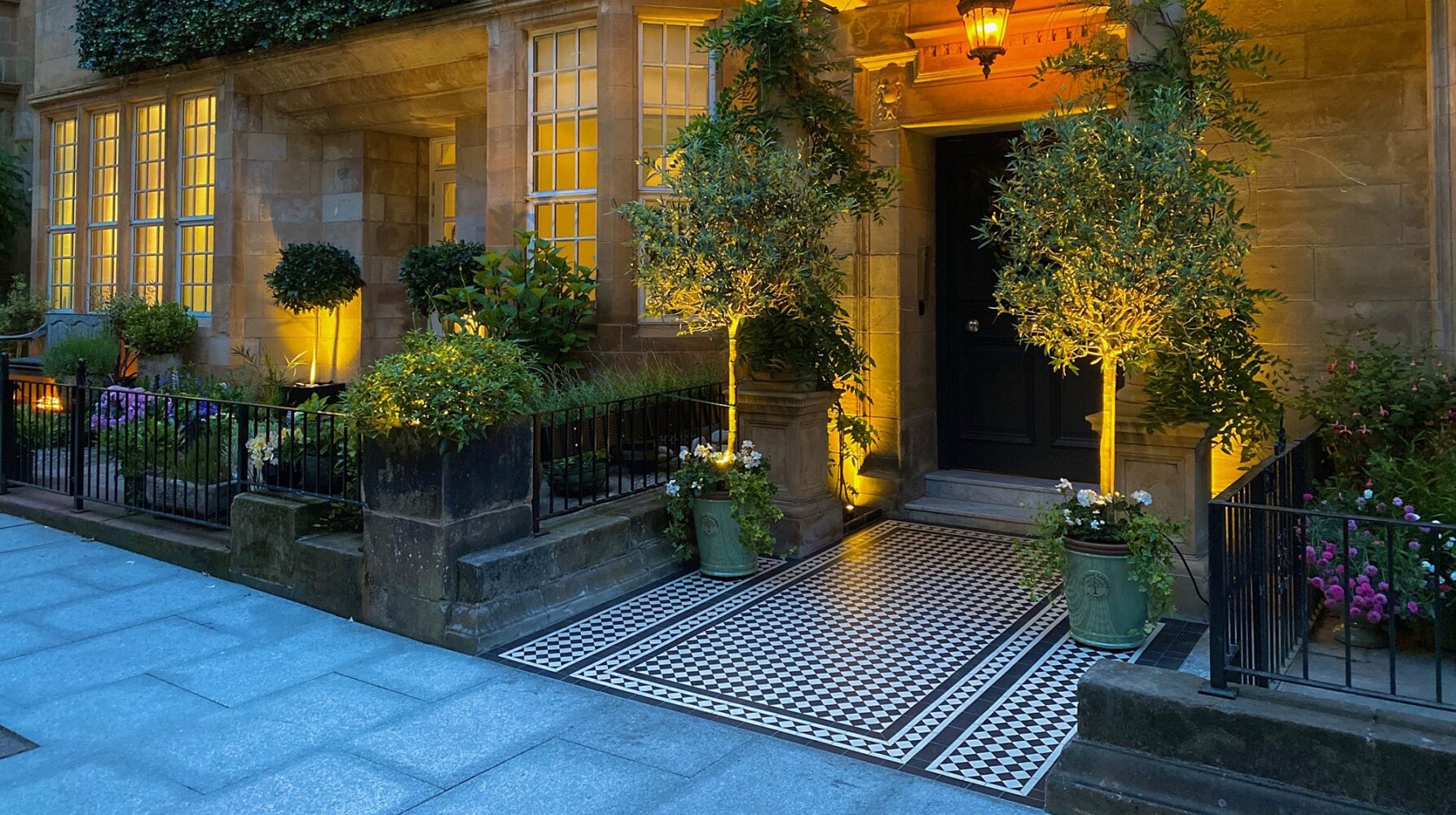
Does the existing floor affect adhesive choice?
Yes. The condition of the substrate is one of the most important considerations during Victorian tile installation.
Older properties in Glasgow, Edinburgh and Newcastle can contain floors that have been repaired, altered or tiled several times over their lifespan. A floor may look relatively sound while still having issues underneath the surface.
Before installing tiles, an installer may need to check for:
- Uneven areas
- Cracks
- Loose sections
- Moisture
- Contamination
- Old adhesive
- Movement in the substrate
- Weak or damaged screed
- Unsuitable existing flooring
If these issues are ignored, even a high-quality adhesive may fail to provide a long-lasting result.
Victorian tile installation on an uneven floor
Uneven floors require particular attention.
Tile adhesive is not intended to correct significant structural or substrate problems. Applying excessive adhesive to compensate for an uneven surface can create inconsistent coverage and potentially compromise the installation.
Instead, the substrate may need to be levelled or repaired before the tiles are installed.
This preparation can increase the overall project time, but it can also help protect the finished floor from avoidable problems.
Can you use modern adhesive with Victorian tiles?
In many cases, yes. Modern adhesives can be suitable for Victorian-style tile installations, provided they are compatible with the tile and substrate.
The fact that a property is Victorian does not necessarily mean that the installation must use an old-fashioned adhesive system.
Modern products can provide strong and reliable bonding while allowing installers to meet contemporary performance requirements.
The important consideration is not whether an adhesive is “traditional”, but whether it is technically appropriate for the specific floor.
For heritage properties, however, the existing construction may require additional care. A professional installer should consider the condition and characteristics of the original floor before deciding how to proceed.
Adhesive selection for Victorian tile restoration
Installing new tiles and restoring an existing Victorian floor are two different processes.
With Victorian tile restoration, the objective may be to preserve as much of the original floor as possible. Some damaged tiles can potentially be lifted, cleaned and reinstated rather than replaced.
This means the adhesive selection and preparation process can differ from a completely new installation.
Restoration work may involve:
- Inspecting the existing floor
- Identifying damaged or loose tiles
- Carefully lifting suitable tiles
- Cleaning the tiles and substrate
- Repairing or preparing the underlying surface
- Selecting an appropriate adhesive
- Reinstating the original tiles
- Replacing damaged tiles where necessary
- Regrouting and finishing the floor
The objective is to retain the character of the original floor while improving its condition and usability.
What should you ask a tile installer before starting?
Before hiring a tile installation company, ask a few practical questions about how the project will be approached.
- Will you inspect the substrate?
A good installation starts with the surface underneath the tiles. Ask whether the installer will assess the condition and identify any preparation work required. - Which adhesive will you use?
The installer should be able to explain why the selected adhesive is suitable for your specific tile and substrate. - Does the quote include floor preparation?
Clarify whether levelling, repairs, removal of existing tiles or other preparation work is included. - Do you work with Victorian and patterned tiles?
Small-format and patterned tiles require careful setting out. Experience with decorative flooring can help ensure the pattern is correctly aligned. - Do you provide restoration as well as installation?
If you have an original Victorian floor, restoration may be preferable to complete replacement in some circumstances.
Common mistakes to avoid when installing Victorian tiles
Choosing an expensive adhesive does not guarantee a successful floor. Some of the most common problems occur because of installation or preparation mistakes.
- Using adhesive without checking compatibility: Different tiles and substrates have different requirements. Always follow the adhesive and tile manufacturer’s recommendations.
- Skipping substrate preparation: Dust, loose material, moisture and uneven surfaces can compromise the bond.
- Applying too much adhesive: Adhesive should not be used as a substitute for proper floor preparation.
- Rushing the setting-out process: Victorian patterns need accurate planning. Small positioning errors can become increasingly noticeable as the pattern progresses.
- Choosing products based only on price: The cheapest adhesive may not be appropriate for the installation. Product suitability, installation conditions and long-term performance should all be considered.
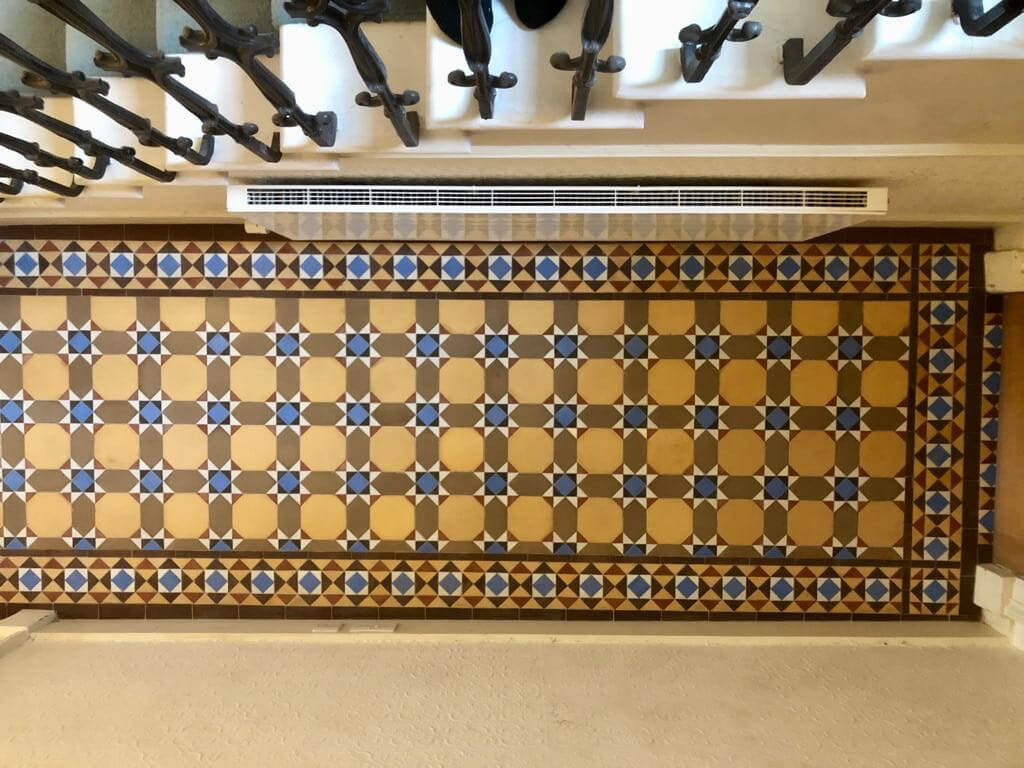
Why choose professional Victorian tile installation?
Victorian floors can look deceptively simple. Once installation begins, however, the installer needs to consider pattern alignment, substrate preparation, tile compatibility, adhesive coverage, cuts and finishing details.
Professional tile installation services can provide the practical expertise needed to manage these details.
For homeowners and businesses, professional installation can also reduce the risk of avoidable issues such as loose tiles, uneven finishes and premature deterioration.
If you are unsure whether your existing floor needs restoration or a complete replacement, a professional assessment can help you understand the available options before work begins.
Get professional advice on Victorian tile installation
The right adhesive is an important part of a successful Victorian floor, but it is only one part of the installation system. The tile, substrate, adhesive, grout and preparation process all need to work together.
Were Tiling help homeowners and businesses with professional tile installation and specialist tiling requirements. Whether you are planning a new decorative floor or considering Victorian tile restoration, our team can assess your requirements and recommend a suitable approach.
Planning a Victorian tile project in Glasgow, Edinburgh or Newcastle? Contact Were Tiling to discuss your floor and request a quotation.