


If you’ve uncovered original Victorian tiles beneath old carpet in a New Town hallway, noticed loose geometric tiles in a Marchmont vestibule, or inherited a cracked tiled path in a period property, one question tends to come up quickly:
How much does professional Victorian tile restoration cost in Edinburgh?
It’s a fair question, and the honest answer is that Victorian tile restoration is not priced like standard tiling. Every floor has its own story, its own damage, and its own level of craftsmanship required. Some projects need little more than cleaning Victorian tiles, local grout restoration, and a handful of repairs. Others involve lifting damaged sections, sourcing replica tiles, correcting movement in the subfloor, and carefully rebuilding historic patterns tile by tile.
In Edinburgh, where Victorian and Georgian architecture are part of the city’s identity, professional restoration is often less about “putting down new tiles” and more about conserving a period feature properly.
This guide breaks down what affects the Victorian tile restoration cost, what you can expect from a professional restoration service, and when restoration is a smarter investment than full tile replacement.
Quick Answer: How Much Does Victorian Tile Restoration Cost in Edinburgh?
There’s no single flat rate because Victorian floors vary hugely in condition, size, and complexity. However, in practical terms, the cost of Victorian tile restoration Edinburgh projects usually depends on five things:
- The size of the tiled area: A small vestibule or storm-door entrance costs less to restore than a long hallway, large path, or multiple rooms.
- The condition of the existing tiles: A floor that only needs cleaning and resealing is very different from one with missing tiles, loose sections, water damage, or widespread cracking.
- How much repair work is required: Costs rise if the job includes Victorian tile repair, broken tile repair, cracked tile repair, subfloor stabilisation, or tile replacement.
- Whether matching replacement tiles are needed: Original or replica Edinburgh tiles for period homes can take time to source, especially if the floor uses a historic geometric or mosaic pattern.
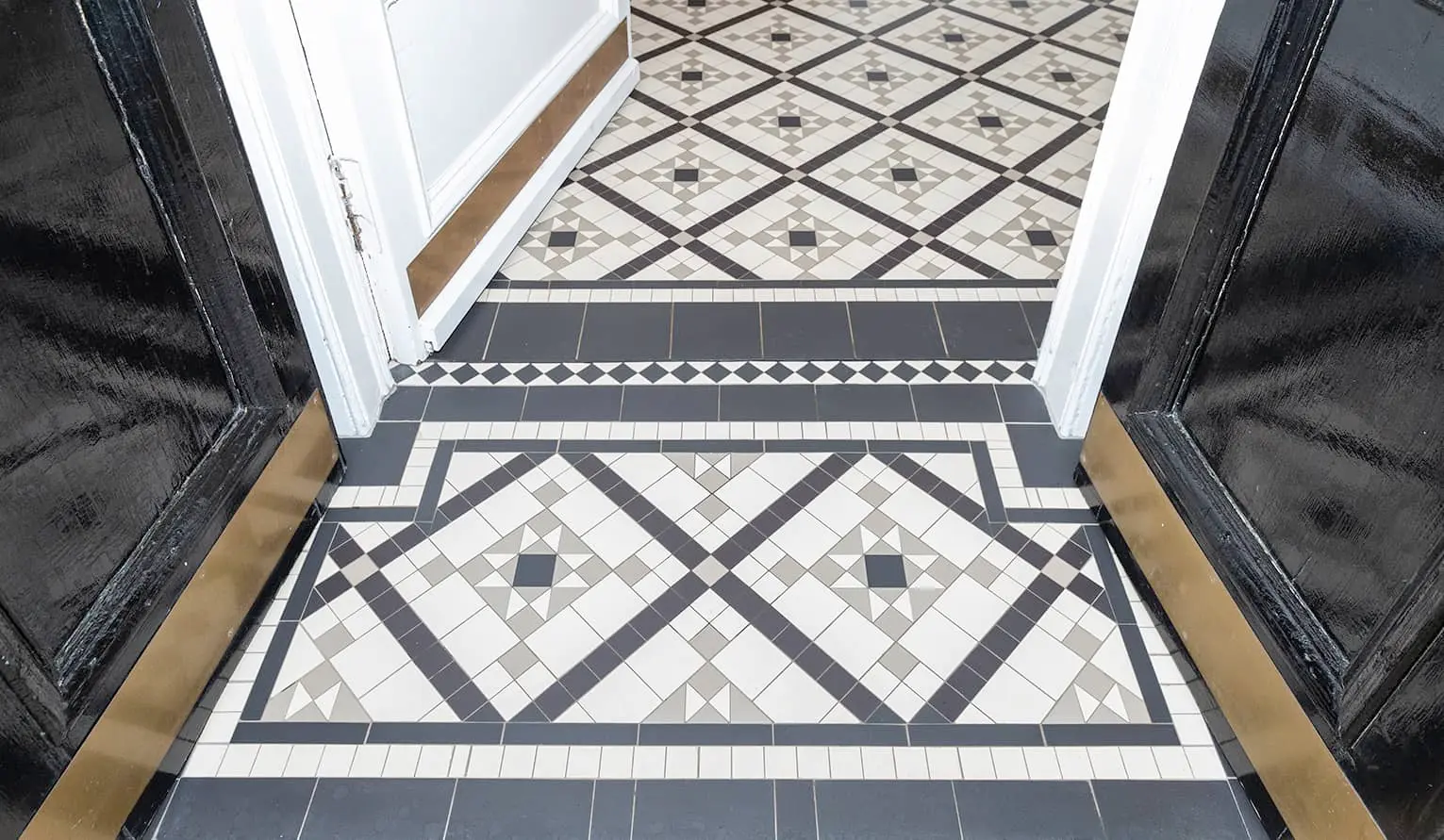
- The level of detail in the pattern: A simple border and field layout is one thing; a Victorian mosaic vestibule with intricate geometry is another.
So while there’s no one-size-fits-all price, the best way to think about Victorian restoration cost is this:
You’re paying for conservation, not just labour.
A professional restorer not only cleans tiles but also protects historic material, preserves pattern integrity, and extends the life of a floor that may already be more than 100 years old.
Why Does Victorian Tile Restoration in Edinburgh Cost More Than Standard Tiling?
If you’ve ever compared restoration quotes with ordinary floor tiling prices, restoration can look more expensive at first glance. But the two jobs are completely different. Modern tiling usually starts with a blank, even substrate and new materials. Victorian restoration often begins with a floor that has:
- Cracked or loose tiles
- Old wax, paint, or sealers trapped in the surface
- Missing sections
- Worn or failing grout
- Moisture issues near entrances or paths
- Uneven subfloors caused by movement over decades
- Historic patterns that need careful matching
Professional tile restoration in period properties requires a slower, more specialised process than modern installation. In Edinburgh, that’s especially true in older townhouses, tenements, villas, and converted properties where original tiled vestibules, hallways, hearths, and paths are still in place.
In other words, Victorian floor tile restoration is part craftsmanship, part conservation, and part problem-solving.

What’s Included in Professional Victorian Tile Restoration?
When people ask about Victorian tile restoration in Edinburgh, they often imagine the job is mostly about cleaning. In reality, a proper restoration service can involve several stages depending on the floor’s condition.
Inspection and condition assessment
A professional tiles specialist will usually start by looking at:
- Which tiles are original and which have been replaced
- Whether the floor is loose or hollow in places
- Signs of damp, staining, or subfloor movement
- Cracks, chips, and missing pieces
- The condition of the grout
- Whether the floor has previously been coated with waxes or sealers
This early stage matters because it shapes the scope of the work and therefore the cost.
Cleaning Victorian tiles properly
One of the biggest visual transformations often comes from simply cleaning Victorian tiles correctly. Many period floors look far worse than they actually are because years of dirt, linseed oil, wax, polish, and general traffic have dulled the surface.
Professional cleaning may involve:
- Removing ingrained dirt and old coatings
- Carefully lifting the stain without damaging the tile face
- Cleaning out joints before grout restoration
- Preparing the floor for repairs and sealing
This is not the same as mopping with a shop-bought cleaner. Historic floors need the right products and methods, especially when working with old encaustic or geometric tiles.
Victorian tile repair
This is where the restoration becomes more skilled, and often where the cost starts to rise. Victorian tile repair may include:
- Re-bedding loose tiles
- Repairing cracked sections
- Replacing badly damaged tiles
- Rebuilding edges or borders
- Reconstructing parts of a mosaic pattern
- Correcting old, poor-quality repairs
If the floor has sentimental or architectural value, careful repair is usually preferable to full tile replacement.
Grout restoration
Grout is often overlooked, but it plays a big role in the appearance and longevity of a tiled floor.
Professional grout restoration can include:
- Removing failed or mismatched grout
- Repointing joints in a sympathetic colour
- Stabilising the surrounding tiles
- Improving water resistance in entranceways or paths
On old floors, the wrong grout colour or texture can repair look obvious. The right grout makes the floor feel whole again.
Tile replacement where necessary
Not every tile can be saved. Sometimes a tile is cracked through, badly chipped, or missing altogether. In these cases, a restoration specialist may need to source or reproduce matching tiles.
This part of the project can affect Victorian tile restoration cost significantly, because:
- Reclaimed tiles may be hard to find
- Replica tiles may need to be specially sourced
- Colours, shapes, and dimensions need to match the original floor
- Decorative borders or motifs take longer to recreate than plain tiles
Sealing and aftercare
Once the floor is clean, stable, repaired, and regrouted, sealing helps protect it from future staining and wear. This is particularly important for high-traffic entrance halls and exposed areas.
The Biggest Factors That Affect Victorian Tile Restoration Cost in Edinburgh
If you’re comparing quotes for tile restoration services, here’s what usually drives the price up or down.
Floor size
A compact storm-door vestibule in a Victorian tenement will naturally cost less than a full hallway plus path restoration. More tiles, more grout lines, and more cleaning time all add up.
Level of damage
A floor with a few loose tiles and surface grime is a very different project from one that needs:
- Extensive tile repairs
- Broken tile repair
- Cracked tile repair
- Large sections lifted and relaid
- Moisture remediation
The more intervention the floor needs, the higher the cost.
Pattern complexity
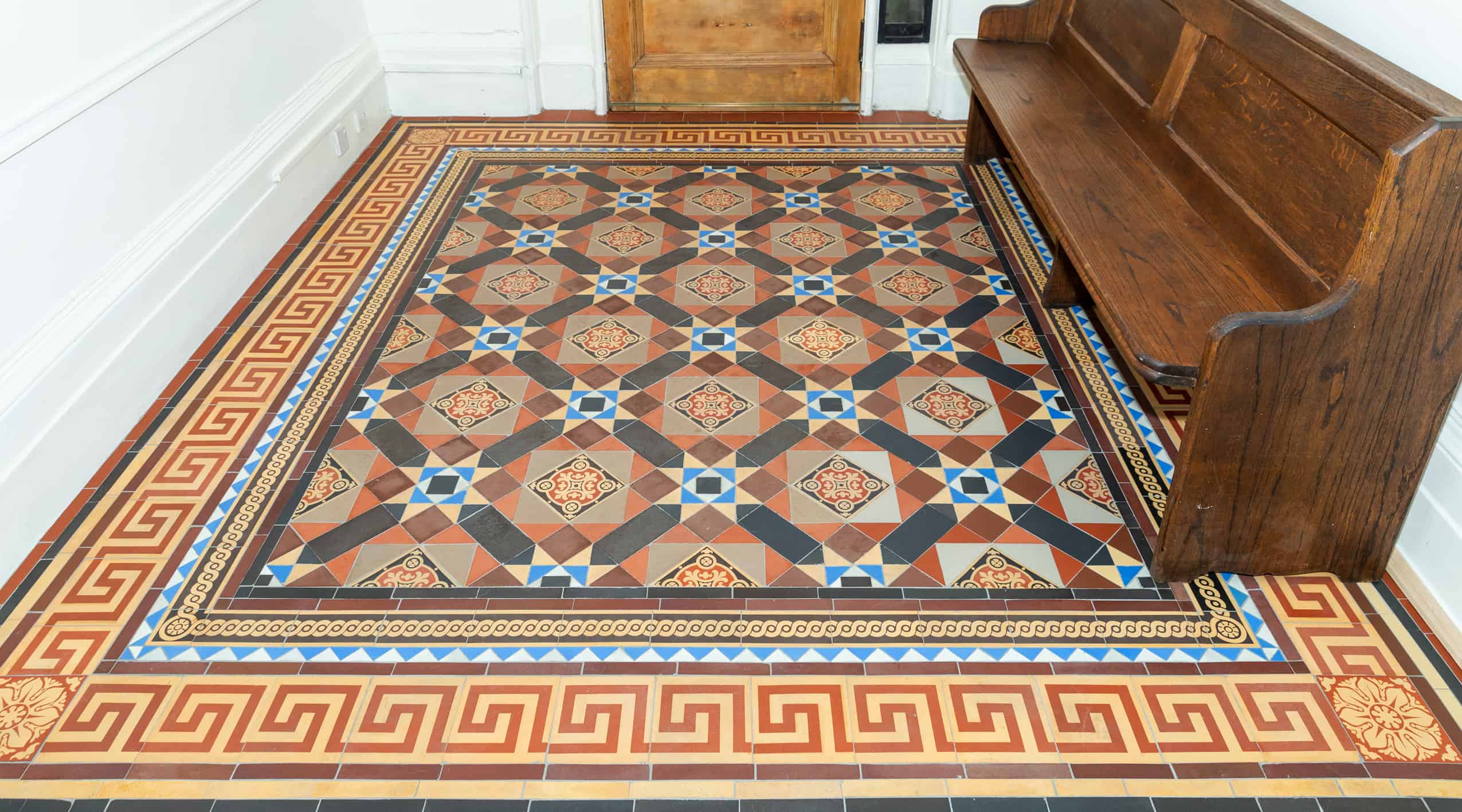
A simple Victorian floor can often be restored more quickly than a detailed mosaic with borders, corners, and colour changes. Intricate Victorian tiles and geometric layouts require slower work and more precise tile matching.
Tile sourcing
If the restoration needs replacement tiles, the cost depends on whether the right tiles are:
- Already available
- Recoverable from elsewhere on site
- Available as reclaimed stock
- Required as custom or reproduction tiles
Access and location of the floor
An entrance hallway in a lived-in home is usually easier to manage than an outdoor path, a tenement close, or a commercial entrance where access, weather, and public use complicate the work.
Underlying floor condition
Sometimes the visible tile damage is only part of the problem. If the substrate beneath the floor has moved or failed, repairs may require lifting sections, stabilising the base, and relaying tiles properly before the decorative work can be finished.
Is Restoration Better Value Than Full Tile Replacement?
In many cases, yes.
If the original floor is largely intact, Victorian floor tile restoration is often better value than ripping everything out and starting again. Here’s why:
Restoration keeps the original character
Period homes in Edinburgh often command value because of their original features. Restoring a hallway or vestibule preserves the property’s story in a way new tiles rarely can.
It avoids unnecessary loss
If 80–90% of the floor can be saved, replacing the whole thing may be unnecessary and more expensive in the long run.
It can increase property appeal
Buyers and guests notice original tiled entrances. A well-restored floor creates the sort of first impression that estate agents love talking about.
It’s often more sustainable
Saving and repairing original materials is usually better than sending them to landfill and replacing them with new ones.
That said, there are times when tile replacement makes sense, especially if the floor has been heavily altered, too many tiles are missing, or previous repairs have caused serious instability.
Why Edinburgh Homeowners Choose Were Tiling?
At Were Tiling, restoration is not an add-on service; it’s a core part of what we do.
We work with homeowners, heritage properties, and commercial spaces across Edinburgh, Glasgow, and Newcastle, restoring original period floors with a focus on conservation, craftsmanship, and long-term durability.
Our work includes:
- Victorian tile restoration in Edinburgh
- Victorian tile repair Edinburgh
- Hallway and vestibule restoration
- Grout restoration
- Sensitive replacement of damaged historic tiles
- Advice on maintenance solutions for restored floors
Because every project is different, we don’t believe in vague guesswork or one-line estimates. We assess the floor, explain what can be saved, and provide a clear quotation based on the actual work required.
Final Thoughts: What Should You Expect to Pay?
So, how much does professional Victorian tile restoration cost in Edinburgh?
The most accurate answer is: it depends on the floor, but good restoration is almost always worth doing properly.
A small project might need a little more than careful cleaning and local repairs. A larger or more damaged floor may need detailed reconstruction, tile sourcing, and structural work beneath the surface. Either way, the cost reflects the time, skill, and care required to preserve a feature that modern flooring can’t replace.
If you have original Victorian tiles in your Edinburgh property, whether in a hallway, vestibule, path, or hearth, the best next step is to get an expert opinion before the damage worsens.
Request a Victorian Tile Restoration Quote in Edinburgh
If you’re looking for:
Victorian tile restoration in Edinburgh. We at Were Tiling are here to help.
We restore, repair, clean, and conserve original Victorian floors across Edinburgh with a focus on authenticity, detail, and long-term performance.
Get in touch today to request a quote and see what your original floor could look like with the right restoration.