


Victorian-era tiles are more than decorative flooring. From intricate geometric patterns in traditional hallways to colourful encaustic tiles in period entrances, they are an important part of many British buildings’ character and history. However, decades of foot traffic, moisture and previous repairs can leave these beautiful surfaces cracked, loose, stained or worn.
Restoring them requires more than simply replacing damaged tiles. In a listed building, every decision should balance practical requirements with the need to preserve the property’s historic character.
At Were Tiling, we understand the importance of choosing the right approach to tile restoration. Whether you own a Victorian tenement in Glasgow, manage a historic property in Edinburgh or are responsible for a heritage building in Newcastle, understanding the restoration process can help you protect original features for years to come.
In this guide, we explain how Victorian tile restoration works, what to consider before starting and how to preserve the beauty of historic tiled floors without compromising their character.
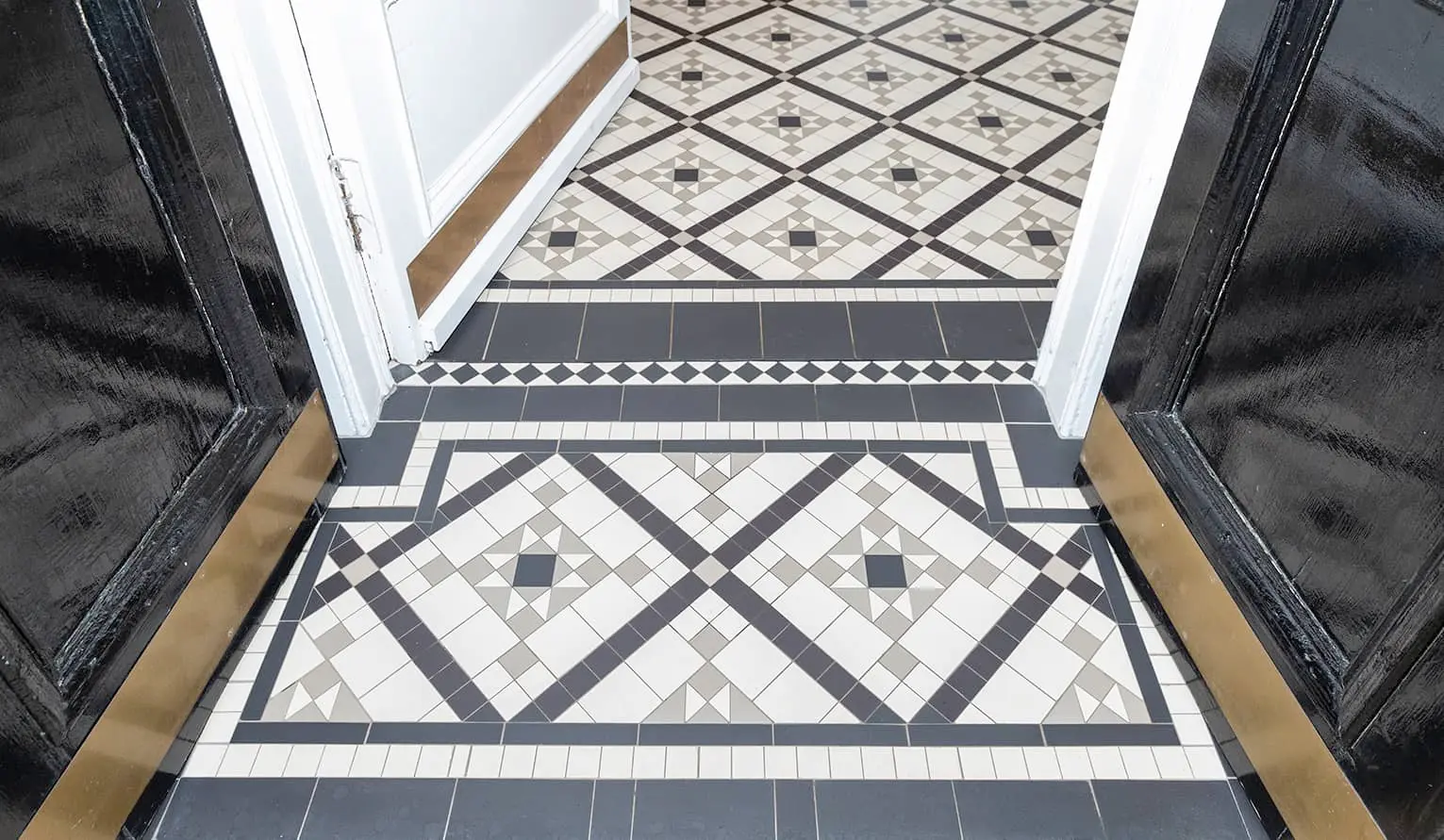
Why Are Victorian Tiles Important in Listed Buildings?
Victorian tiles became popular in the nineteenth century for entrance halls, hallways, fireplaces and other prominent areas of residential and commercial buildings. Their geometric patterns, rich colours and durable construction made them both practical and visually striking.
Common features include:
- Geometric floor tiles: Repeating patterns made from squares, diamonds, triangles and other shapes.
- Encaustic tiles: Decorative tiles in which the pattern is formed using different coloured clays rather than painted onto the surface.
- Mosaic designs: Small tiles arranged into detailed patterns or borders.
- Contrasting borders: Decorative edging that frames hallways and entrance floors.
In a listed building, these features may contribute to its architectural and historic significance. Removing or replacing them with modern alternatives can permanently change the interior.
This is why historic tile conservation focuses on retaining as much original material as possible. Rather than making an old floor look completely new, the aim is to stabilise it, repair damage and preserve the character that makes it unique.
What Causes Victorian Tiles to Deteriorate?
Before undertaking Victorian tile restoration, we should identify the damage. Treating visible symptoms without addressing the underlying problem can cause further deterioration.
Moisture and rising damp
Older buildings may experience moisture problems caused by leaking pipes, defective rainwater goods, ground moisture or inadequate drainage. Damp leaves tiles discoloured, encourages salt deposits and weakens the bedding material beneath the floor.
White, powdery marks on the surface may indicate salt migration, although other causes are possible. A professional assessment can help identify the source.
Loose, cracked or missing tiles
Movement in the underlying floor, deterioration of the bedding material and heavy foot traffic can cause tiles to loosen, crack or detach. Missing tiles can also expose the substrate to further damage.
Simply filling gaps or replacing individual tiles without checking the surrounding floor may only provide a temporary solution.
Unsuitable cleaning products
Aggressive chemicals, abrasive tools and inappropriate acidic cleaners can damage historic tile surfaces or affect the surrounding mortar and grout.
Some older tiles have a porous or unglazed finish, making them particularly vulnerable to unsuitable treatments. Cleaning methods should be selected according to the tile material, condition and previous treatments.
Inappropriate previous repairs
Cement, hard adhesives, impermeable coatings, or mismatched tile replacement introduced during earlier renovations can affect moisture movement, appearance, and the floor’s ability to accommodate movement.
A careful assessment helps determine which previous repairs should remain and which may need specialist attention.
Step-by-Step: How to Restore Victorian-Era Tiles
The right restoration method depends on the tile’s condition, the building’s construction, and any restrictions associated with its listed status. However, a typical project follows several important stages.
Step 1: Assess the condition of the original floor
The first step is a detailed inspection of the tiled surface and its surroundings.
A restoration specialist will look for loose tiles, cracks, missing sections, damaged grout, staining, moisture problems and uneven areas. The underlying substrate’s condition should be considered, particularly where there are signs of movement or widespread detachment.
Photographs and measurements help document the existing pattern and record areas requiring attention.
For listed properties, this assessment should establish which original features need to be retained and whether specialist conservation advice is necessary.
Step 2: Check listed building consent requirements
Before starting work, establish whether the proposed restoration requires listed building consent.
In Scotland, Historic Environment Scotland advises owners to consult their local planning authority before carrying out work that may affect a listed building’s character. In England, the relevant local planning authority can advise on consent requirements.
Not every repair requires consent. However, work affecting historically significant floors, including their removal or substantial alteration, may need approval. The requirements depend on the building and the proposed intervention.
Where consent is necessary, obtain it before work begins. Do not assume that replacing an old floor with a similar modern design is automatically acceptable.
For guidance, consult Historic Environment Scotland or Historic England’s guidance on historic architectural tiles.
Step 3: Clean the tiles using appropriate methods
Cleaning can reveal the original colours and patterns hidden beneath years of dirt, wax or unsuitable coatings.
However, historic tile cleaning should be approached carefully. A specialist will select a method appropriate to the material and condition, often testing it on a small, inconspicuous area first.
Gentle cleaning with suitable products and non-abrasive tools may be sufficient for some floors. More stubborn deposits or previous coatings may require specialist treatment.
Avoid using strong acids, aggressive grinding equipment or high-pressure cleaning without professional advice. These methods can cause irreversible damage.
The aim is to remove harmful deposits and surface dirt without stripping away the natural character of the tiles.
Step 4: Repair loose, cracked and missing tiles
Where tiles have become detached, the cause of the failure should be addressed before they are refixed. This may involve repairing the bedding material or investigating movement and moisture in the substrate.
Wherever possible, original tiles should be retained and repaired. If individual tiles are missing or too damaged to reuse, reclaimed or accurately matched replacement tiles may be appropriate.
Matching involves more than finding the same colour. Size, thickness, surface finish, pattern, age and installation method all influence the final result.
For decorative Victorian floors, careful placement is particularly important because even a small mismatch can disrupt the overall design.
The objective is to achieve a stable, visually coherent floor while retaining as much original material as practicable.
Step 5: Repair the grout and surrounding joints
Damaged or missing grout can make a Victorian tiled floor look neglected and allow dirt and moisture to enter the joints.
Before regrouting, assess the existing joint material and the construction of the floor. The replacement should be compatible with the tiles and underlying materials.
Modern grout is not automatically the best choice for every historic floor. A suitable specification will depend on the original construction, the condition of the joints and any conservation requirements.
Once repairs are complete, remove excess material using methods that will not scratch the tiles or damage their edges.
Step 6: Address the underlying cause of damage
Successful Victorian tile restoration involves more than improving the visible surface.
If moisture is responsible for staining, for example, the source should be investigated and resolved before further treatments are applied. Likewise, recurring cracks may indicate movement that needs to be assessed.
Where a floor has been affected by damp, avoid applying an impermeable sealant simply to hide the problem. Some coatings can trap moisture or interfere with the way traditional building materials behave.
A restoration plan should prioritise the cause of deterioration as well as the appearance of the finished floor.
Step 7: Protect and maintain the restored floor
Once repairs and cleaning are complete, consider whether any protective treatment is appropriate.
Not all Victorian tiles need sealing, and not every sealant is suitable for historic materials. The decision should depend on the tile type, porosity, condition and intended use of the space.
Regular maintenance is often more effective than relying on a heavy protective coating. Use suitable cleaning products, remove spills promptly and inspect the floor periodically for loose tiles, damaged joints or signs of moisture.
These simple measures can help preserve the floor’s appearance and reduce the likelihood of more extensive repairs in the future.

Can Damaged Victorian Tiles Be Restored Without Replacing the Entire Floor?
Yes. In many cases, individual tiles or small sections can be repaired without replacing the entire floor.
The best approach depends on the extent of the damage and the condition of the original materials. A floor with a few loose tiles may need localised repairs, while widespread cracking, moisture damage or substrate failure may require more extensive work.
Where tiles are missing, reclaimed tiles or carefully selected replicas can help maintain the original pattern. However, replacement should be considered only after assessing whether the existing tiles can be retained.
For listed buildings, a repair-first approach is often preferable because it preserves historic fabric and reduces unnecessary intervention.
A professional assessment can help establish whether targeted repairs are sufficient or whether a more comprehensive restoration plan is needed.
How Much Does Victorian Tile Restoration Cost?
The cost of Victorian tile restoration varies considerably depending on the size of the floor, the condition of the tiles and the complexity of the work.
Factors that influence the price include:
- Extent of damage: A few loose tiles generally require less work than widespread deterioration.
- Tile availability: Finding reclaimed or accurately matched replacements can increase costs.
- Substrate repairs: Addressing movement, damp or damaged bedding may add to the overall project.
- Pattern complexity: Intricate geometric designs require careful matching and placement.
- Conservation requirements: Specialist advice, documentation and any consent-related requirements can affect the project scope.
The most cost-effective solution is not necessarily the cheapest immediate repair. Addressing the underlying cause of damage can help prevent recurring problems and avoid additional expense later.
For an accurate estimate, arrange an assessment of the floor and discuss the most appropriate restoration options before committing to the work.
Why Choose Professional Victorian Tile Restoration?
Restoring historic tiles requires an understanding of tile materials, traditional construction methods and the importance of preserving original features.
A professional assessment can help you avoid common mistakes, including using unsuitable cleaning products, replacing tiles unnecessarily or overlooking moisture problems.
For homeowners, landlords, property managers and businesses, professional restoration can help retain the character of a historic interior while making the floor more practical for everyday use.
At Were Tiling, we understand that every tiled surface has different requirements. Whether you are maintaining a traditional entrance hall, restoring a decorative hallway floor or repairing damaged period tiles, choosing an appropriate approach is essential to achieving a lasting result.
If your property is in Glasgow, Edinburgh or Newcastle, it is worth seeking advice before attempting extensive repairs yourself.
Restore the Character of Your Historic Tiled Floor with Were Tiling
Victorian tiles give historic buildings a distinctive character that modern flooring cannot easily reproduce. With careful assessment, appropriate cleaning and thoughtful repairs, many original floors can be preserved for future generations.
The key is to understand the condition of the tiles, protect the building’s historic features and choose restoration methods that address the cause of damage rather than simply covering it up.
Planning a Victorian tile restoration project in Glasgow, Edinburgh or Newcastle? Contact Were Tiling to discuss your tiled floor, explore suitable repair options and request a quote. We’ll help you take the next step towards preserving the character and beauty of your property.
Frequently Asked Questions About Victorian Tile Restoration
- Can original Victorian tiles be restored if they are badly stained?
Often, yes. The result depends on the tile material, the type of staining and whether the surface has been damaged. Specialist cleaning may improve the appearance, but some staining or wear may remain. A test area can help establish realistic expectations. - Should Victorian tiles be sealed after restoration?
Not always. Some tiles may benefit from a compatible protective treatment, while others are better left untreated. The decision should be based on the material, condition and moisture characteristics of the floor. - Do I need listed building consent to restore Victorian floor tiles?
It depends on the proposed work and its effect on the building’s special architectural or historic character. Minor like-for-like repairs may not require consent, but removal or significant alteration of historic flooring may do so. Check with the relevant local planning authority before starting. - Is it better to replace or repair Victorian tiles?
Repair is often preferable when the original tiles can be retained safely. Replacement may be necessary where tiles are missing or beyond repair, but reclaimed or closely matched tiles can help preserve the overall design. - How can I maintain restored Victorian tiles?
Clean the floor regularly using suitable, non-abrasive products; avoid harsh chemicals and investigate any recurring moisture or cracking. Periodic inspections can help identify small problems before they become more extensive.